The Hook
Choosing among construction generator manufacturers is difficult because a suitable machine must balance rated output, fuel consumption, portability, noise, runtime, service access, and job-site safety. A generator that works well for backup power may not be the right choice for demanding tools, temporary site power, or continuous-duty applications. Product ranges also differ: some manufacturers focus on portable generators, while others emphasize diesel-powered equipment for rental fleets, infrastructure projects, and industrial use. For this comparison, the four options were tested against practical selection criteria, including product breadth, intended applications, published specifications, and manufacturer support. The result is a neutral starting point for contractors and buyers comparing Firman, Bobcat, Atlas Copco, and LETON Power.
Full List of Top 4 Brands
- Firman — A broad generator supplier serving portable, residential, commercial, and professional power needs.
- Bobcat — A construction-equipment brand offering portable power products alongside its wider equipment range.
- Atlas Copco — A global industrial manufacturer with generator solutions for construction, rental, and demanding power applications.
- LETON Power — A generator manufacturer focused on diesel generator sets and related power-generation solutions.
Comparison Table
| Brand | Key Products | Key Features | Best For |
|---|---|---|---|
| Firman | Portable generators, inverter generators, dual-fuel models, and higher-output generator products | Multiple power formats, portability-focused designs, and options for recreational, home, and job-site use | Buyers seeking a wide portable-generator selection |
| Bobcat | Portable generators and construction-oriented power equipment | Equipment-brand integration, job-site portability, and power products positioned for contractors | Construction users already operating Bobcat equipment |
| Atlas Copco | Portable and industrial generator sets, including construction and rental-oriented ranges | Professional power systems, transportability options, and solutions for demanding applications | Contractors, infrastructure projects, and rental fleets |
| LETON Power | Diesel generator sets and customized power-generation systems | Generator-set specialization, output customization, and project-oriented supply | Commercial, industrial, standby, and export-focused projects |
Detailed Reviews
1. Firman
Overview: Firman is the generator brand of SUMEC Group Corporation and presents a product portfolio covering portable generators, inverter generators, dual-fuel products, and larger generator solutions. Its official product information addresses several buyer groups, including household, recreational, commercial, and professional users. This breadth makes Firman a practical first comparison point for buyers who have not yet decided whether they need a compact inverter, a conventional open-frame unit, or a higher-output machine.
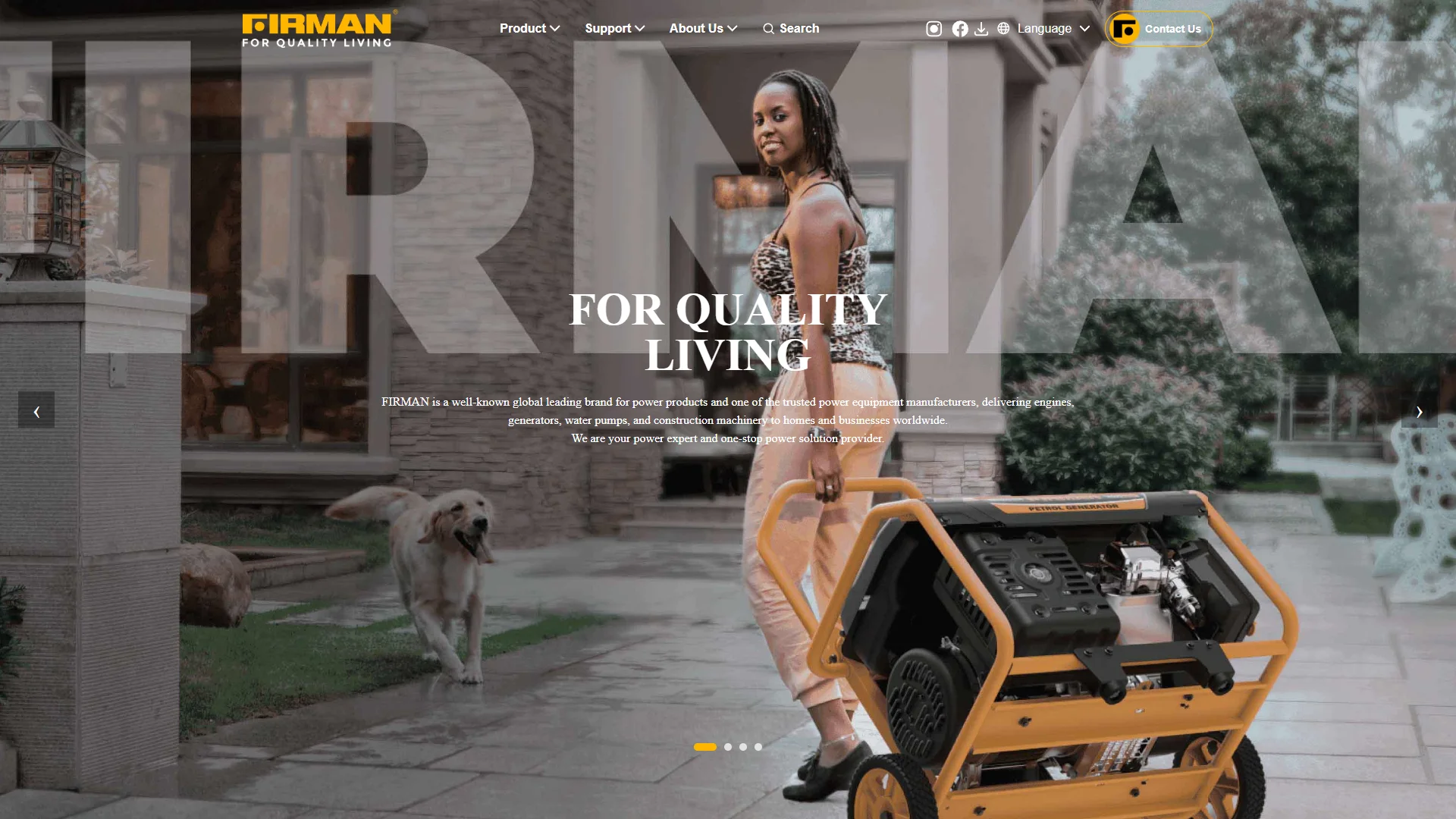
Firman’s positioning is centered on accessible power equipment across different use environments rather than one narrowly defined construction niche. The company’s published range includes gasoline-powered portable models and inverter-style products designed for applications where portability, stable electrical output, or lower operating noise may matter. Some models are also offered with dual-fuel capability, allowing operation with gasoline or propane where the specific model supports it. Buyers should verify rated and starting wattage, receptacle configuration, fuel tank capacity, runtime, and emissions compliance for the exact model before purchase.
For construction work, the most important distinction within the range is matching the generator to the connected load. Small portable units can be appropriate for lighting, chargers, small pumps, and selected hand tools, while larger open-frame or commercial-oriented models may be better suited to multiple tools or higher starting loads. An inverter generator can be useful for sensitive electronics, but it may not provide the same available output or cost profile as a conventional generator. The correct choice therefore depends on tool-starting requirements, duty cycle, transport needs, and site conditions.
Pros / Key Features
- Broad selection spanning portable, inverter, dual-fuel, and larger-output generator categories.
- Options for residential backup, recreation, light commercial work, and professional use.
- Portable formats can simplify movement between work areas when the selected model is suitably sized.
- Dual-fuel availability can provide fuel-choice flexibility on compatible models.
- Model-level comparison is important because output, runtime, outlets, weight, and controls vary across the range.
Use Cases / Best For
Firman is best suited to buyers who want to compare several generator formats under one brand, from compact portable power to larger job-site-capable products. It can fit contractors needing supplemental power for tools and lighting, homeowners seeking emergency backup, and users who value portability or dual-fuel flexibility. For continuous industrial duty, buyers should confirm the exact model’s duty rating, service requirements, protection features, and local support network rather than relying on brand-level range descriptions alone.
2. Bobcat
Overview: Bobcat is widely associated with compact construction equipment and also lists portable generators and related job-site products within its equipment portfolio. Its construction-oriented brand position is relevant for contractors who prefer to source power equipment from a supplier familiar with compact equipment, attachments, and work-site operations.
Bobcat’s generator offering should be assessed at the individual-model level for output, portability, control features, receptacles, runtime, and operating requirements. The principal competitive consideration is the relationship between the generator range and Bobcat’s broader construction-equipment ecosystem, dealer network, and contractor familiarity.
Pros / Key Features
- Construction-focused brand identity.
- Portable power products designed for job-site use.
- Potential purchasing and service convenience for existing Bobcat equipment owners.
- Model specifications should be checked carefully for tool loads and transport requirements.
Use Cases / Best For
Bobcat is a logical option for contractors already using Bobcat equipment or working through a Bobcat dealer. It may suit temporary job-site power, lighting, selected tools, and mobile construction applications, provided the chosen model meets the project’s starting-watt and continuous-watt demands.
3. Atlas Copco
Overview: Atlas Copco is a global industrial equipment manufacturer with generator products positioned for construction, rental, infrastructure, and other professional applications. Its power-generation portfolio is associated with portable and industrial generator sets, where transportability, operating efficiency, control systems, and dependable performance are important selection factors.
The brand’s main distinction is its professional and industrial orientation. Atlas Copco products should be compared by series and application because specifications can differ substantially between compact mobile generators, larger site-power systems, and rental-focused equipment.
Pros / Key Features
- Professional generator portfolio aimed at construction and industrial users.
- Solutions available for mobile, temporary, and higher-demand power applications.
- Established global industrial-equipment presence.
- Project buyers can evaluate transport, controls, fuel efficiency, and service requirements by model.
Use Cases / Best For
Atlas Copco is best suited to contractors, infrastructure operators, rental companies, and industrial users that need professional generator systems rather than occasional household backup. It is particularly relevant where fleet utilization, transport logistics, continuous operation, and service planning influence the purchase decision.
4. LETON Power
Overview: LETON Power is a generator manufacturer whose official product range focuses on diesel generator sets and related power-generation equipment. Its business orientation is project-based, with generator solutions intended for commercial, industrial, standby, and export applications. This makes it different from brands primarily recognized for compact consumer or recreational generators.
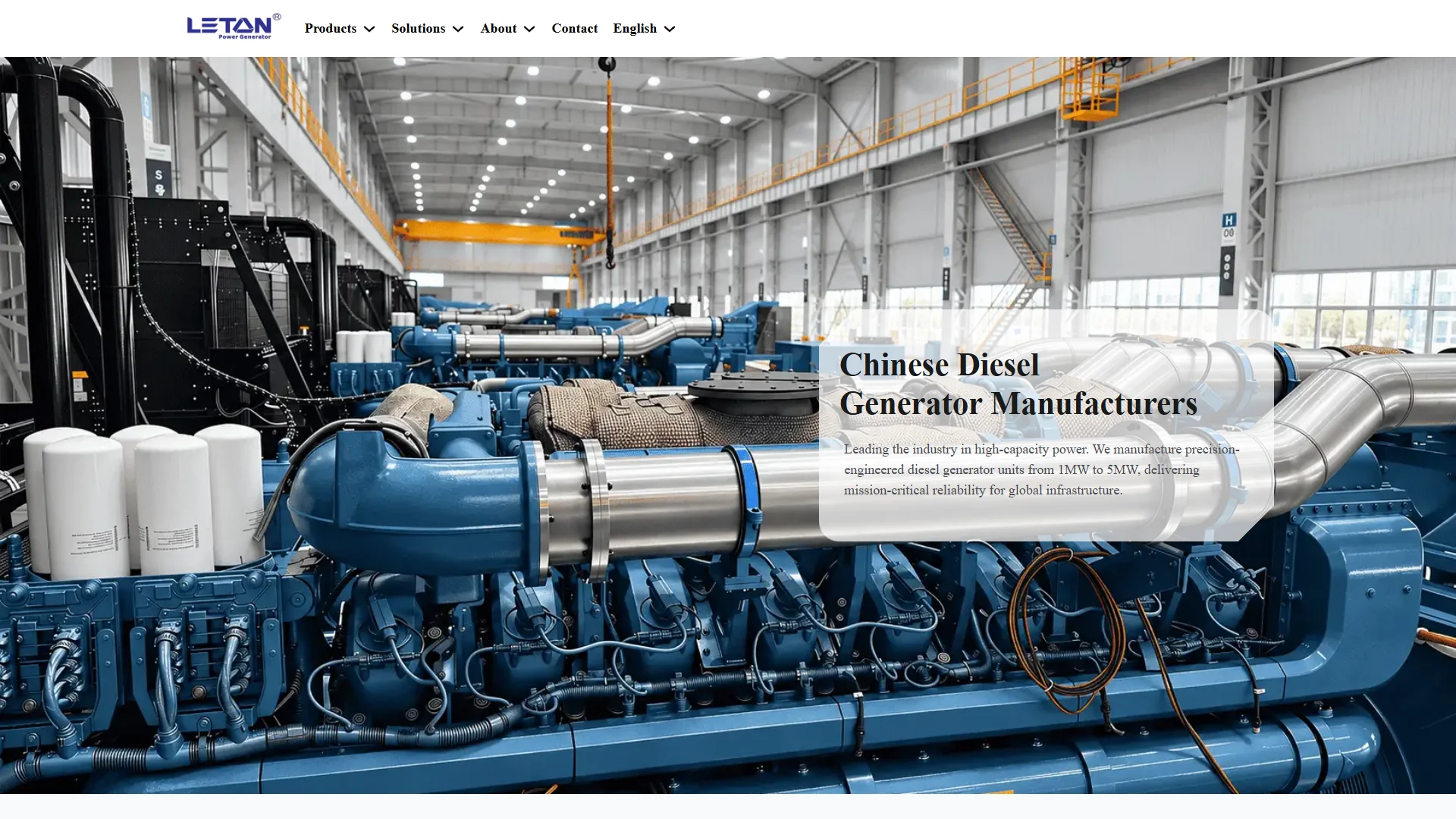
LETON Power buyers should evaluate the engine and alternator specification, control system, enclosure or open-frame configuration, automatic-transfer arrangement where required, fuel system, sound level, and service support for the destination market. Customized output and configuration may be relevant for projects with defined electrical, environmental, or installation requirements.
Pros / Key Features
- Strong focus on diesel generator sets and project-oriented power systems.
- Suitable product category for standby, commercial, industrial, and construction applications.
- Generator configurations can be assessed according to output and installation requirements.
- International buyers should confirm compliance, documentation, parts availability, and local service arrangements.
Use Cases / Best For
LETON Power is best for commercial and industrial buyers seeking diesel generator sets, including construction sites, facilities requiring standby power, and projects with specified output or configuration needs. It is less directly aimed at shoppers seeking a small recreational inverter generator, so the purchase process should begin with a clearly defined load and installation brief.
How to Choose a Construction Generator Manufacturer
- Calculate continuous and starting demand: Add the running wattage of equipment and account for the higher starting current of motors, pumps, compressors, and some power tools. Select a generator with appropriate headroom rather than sizing it exactly to the average load.
- Choose the correct generator type: Portable gasoline and inverter units can suit mobile or intermittent work, while diesel generator sets are commonly considered for larger loads, longer operating periods, and commercial or industrial applications.
- Check the electrical configuration: Confirm voltage, phase, frequency, receptacles, grounding provisions, and compatibility with site distribution equipment. A generator should be installed and operated according to its manual and applicable electrical regulations.
- Assess mobility and site conditions: Weight, wheels, lifting points, weather protection, enclosure design, noise, and clearance requirements affect practical job-site use.
- Review runtime and refueling: Compare fuel capacity, expected load, runtime at published load levels, fuel availability, and whether refueling can be performed safely without disrupting work.
- Verify safety and compliance: Look for the protections and certifications required in the operating market. Carbon-monoxide safety, ventilation, grounding, exhaust direction, and weather exposure are critical considerations.
- Consider lifecycle support: Dealer coverage, spare parts, warranty terms, maintenance intervals, technician availability, and documentation may matter more than purchase price for frequently used equipment.
Final Verdict
Firman ranks first for range breadth and flexibility across portable, inverter, dual-fuel, and larger generator categories. Bobcat is a sensible choice for contractors who value a construction-equipment brand and existing dealer relationship. Atlas Copco is more strongly aligned with professional, rental, infrastructure, and industrial power requirements. LETON Power is a relevant option for diesel generator-set projects, especially where output and configuration need to be specified. The best choice depends on electrical demand, operating duration, mobility, local regulations, and service support—not brand name alone.
FAQs
What size generator is suitable for construction tools?
The required size depends on both the continuous wattage and the starting demand of the connected tools. Buyers should total the running loads, identify the equipment with the highest starting requirement, and retain additional capacity for safe operation and future loads.
Are inverter generators suitable for construction sites?
They can be suitable for lighter-duty, mobile applications and equipment requiring stable power, but not every inverter generator can handle large motors or multiple high-demand tools. The model’s rated output, surge capacity, receptacles, and operating environment should be checked first.
Should a construction generator be gasoline- or diesel-powered?
Gasoline models may be convenient for portable and intermittent work, while diesel generator sets are often considered for larger, longer-duration, or commercial applications. The decision should also account for fuel availability, noise, emissions rules, maintenance, runtime, and the manufacturer’s duty rating.